Practice Overheads Survey

How The ASO's Practice Overheads Study Discovered Medicare Failures.
The ASO Practice Overheads Study 2025–26 was carried out independently by Pioneering Economics. It covered practices representing 192 full-time ophthalmologists and is the third study in a series, following studies in 2009 and 2018. Public hospital cost figures are from the Independent Health and Aged Care Pricing Authority (IHACPA).
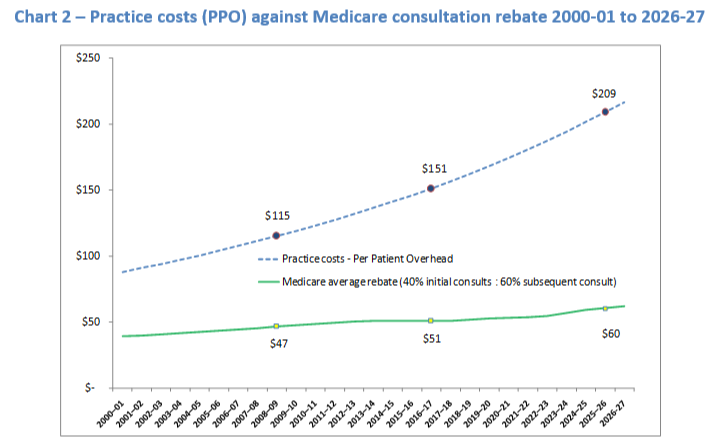
When you see an eye specialist, Medicare pays an average of $60 towards your appointment. It now costs the clinic $209 to provide that appointment.
That gap of almost $150 per patient is at the heart of the ASO’s latest independent study into what it really costs to deliver private eye care in Australia.
Key findings
- $209: the cost to a clinic of seeing one patient
- $60: the average Medicare rebate for that visit
- Nearly double: the cost per patient has risen from $115 to $209 since 2008
- Just $13: how much the Medicare rebate has risen over the same period, from $47 to $60
- 3.7% vs 1.9%: clinic costs are rising by 3.7% a year, while Medicare rebates are rising by 1.9%
- 6.6%: the yearly rise in costs at public hospital eye clinics, according to the Government’s own figures
What’s driving the costs?
Running an eye clinic takes highly trained staff, specialised equipment, premises, insurance and strict safety and compliance standards. Private specilaist clinic costs are rising roughly in line with wages, the same pressures every small business faces.
The costs themselves aren’t unusual. The real problem is that Medicare hasn’t kept up.
This graph shows that the public system is also facing the same inflationary pressures and escalating costs in care delivery, at twice the rates. This demonstrates that our private system continues to much more efficient in ophthalmic care delivery.
It is the expectation of taxpayers that the public system improves efficiency, allowing more patients to see ophthalmologists in a public setting.


What this means for patients
The Medicare rebate is a contribution towards your care. It was never the full cost. When the rebate falls further behind each year, the difference doesn’t disappear. It ends up with patients, with clinics, or back on an already stretched public hospital system.
Private eye specialists provide a large share of Australia’s eye care. About seven in 10 hospital stays for eye conditions are in private hospitals, and around one in four eye specialists also work in public hospitals. Keeping that care sustainable matters for everyone.
What we’re calling for
We are calling on government to:
- recognise the real cost of delivering specialist care
- protect patients’ access to their Medicare benefits
- regularly review Medicare rebates against what care actually costs
READ OUR SUBMISSION
READ THE MEDIA RELEASE

This independent study was conducted alongside Anthony Crook and Pioneering Economics. We thank Mr Crooks for his dedication to this study with the ASO.